
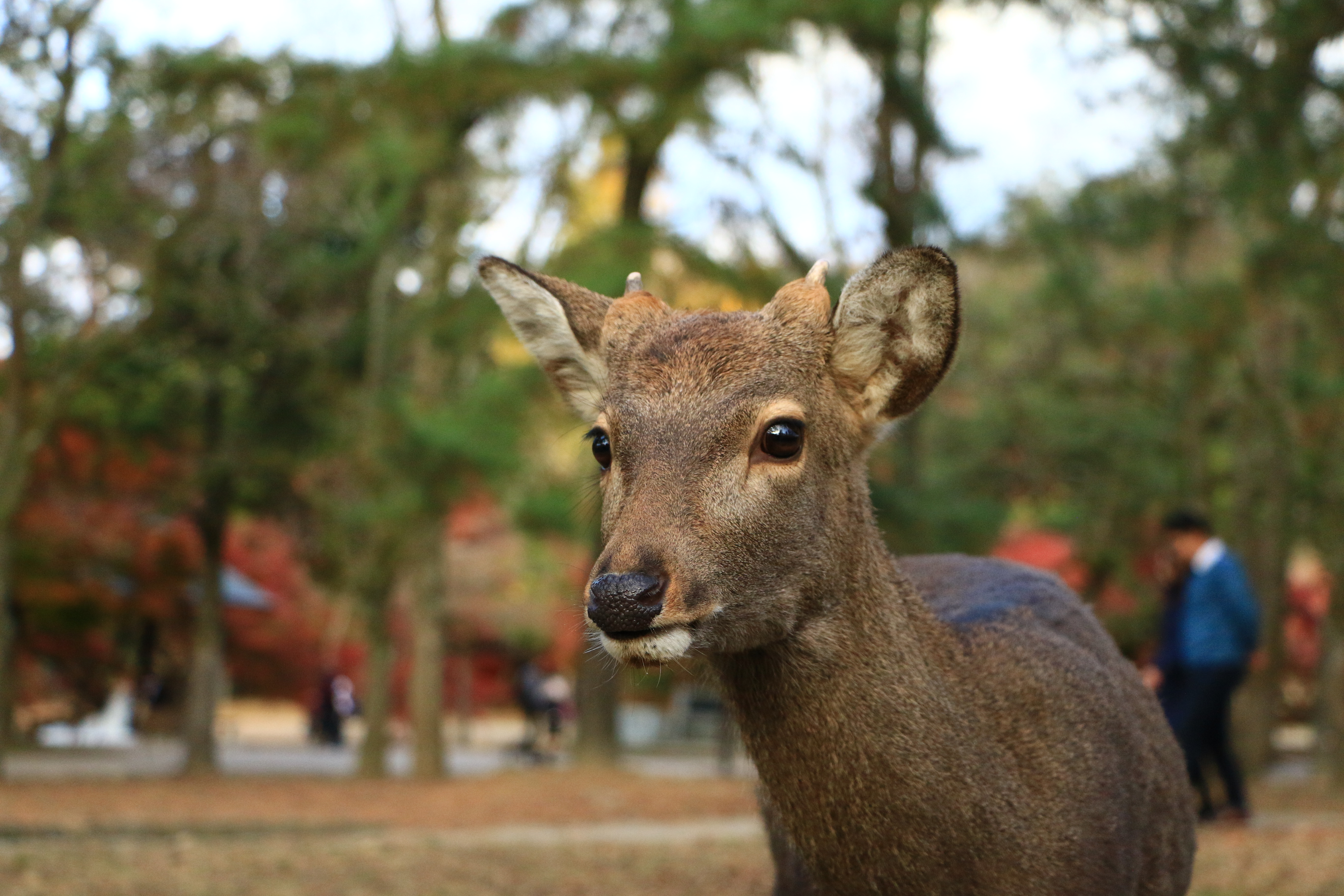
If you are interested in history, architecture, religion and nature, then Nara is definitely one place you should add to your Japanese holiday itinerary.
A relatively quiet and laid back city by Japanese standards, Nara was the first capital city of Japan (710 – 794 A.D.) and boasts a 660 hectare park in the city centre that is peppered with UNESCO World Heritage Sites.
I lived in Nara from 2010-2011 and have been back for holidays twice since then. I must say, Nara is one of my favourite Japanese cities to go for a stroll in because of its layout, accessibility, breathtaking temples and cute deer, of course!
So, lace up your walking shoes! Here is my one day walking tour of Nara City that I have put together for you that takes in all of the highlights.
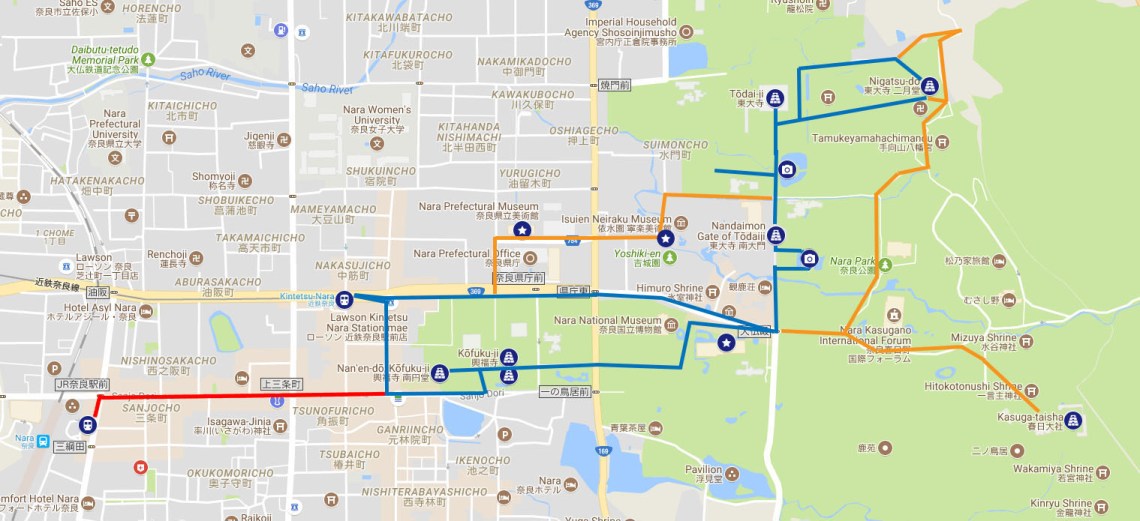
Blue Route: Recommended walking route from Kintetsu Nara Station (roughly 6km return trip)
Orange Route: If you have a bit more time up your sleeves or are super genki, I recommend doing these extensions.
Red Route: If you are coming from JR Nara Station (add an extra 1km each way)
Let’s go!
Nara is in the Kansai region of Japan, so it is easiest to get there from Osaka or Kyoto. From Osaka on the JR Yamatoji Rapid Service, it will take 56min, and from Kyoto on the JR Rapid Service it will take 46min. But really, it’s Japan- everywhere is easily accessible by train. Check HyperDia for the best connections for where you are coming from. For this walking route, I am starting from Kintetsu station as that was my local. Just keep in mind that the JR train station is about 1km further out than the Kintetsu station, so you’ll need to do a bit more walking if you train it there. Refer to my map above.
First Leg: Kintetsu Station to Daibutsuden Intersection (1.3km – 16 min)
As you come out of the eastern exits of Kintetsu station, you’ll have a nice little uphill stroll in front of you towards Nara Park. To the right, you’ll start to be able to see some of the wild deer that roam Nara Park (there are around 1200 of them!). There are gorgeous Japanese maples and cherry blossoms in this area, so if you are in Nara in late March or early December, nature will be putting on a show for you. You’ll eventually come across Nara Kokuritsu Museum, which is good for a drink or ice cream break and to see the exhibitions if you have time.
Second Leg: Daibutsuden Intersection to Todaiji (900m – 10 min)
Turn left at the Daibutsuden Intersection and head down the little pedestrian pathway toward Todaiji. It will be a lot more crowded with tourists here. Deer here are friendly (and gutsy), and will probably approach you for food. For shits and giggles, I recommend buying some deer crackers (shika senbei) for about 150 yen and see what happens. You can also get some human snacks and Nara-centric souvenirs along this strip (anything with Sento kun is my favourite. Go on, Google him. You won’t be disappointed).
About 200m down, there is a quieter meandering pathway off to the right of the main path that I like taking. There is a little creek with stepping stones across, some beautiful stone lanterns, and a pond that is surrounded by Japanese maples (momiji). You’ll then come across the Nandaimon (Great South Gate) that was built in 1203. Don’t forget to look up at all of the impressive wooden joint work, and say hi to the Nio guardians. Keep going, and you will reach Kagami Ike (mirror pond) and Itsukushima Shrine for a beautiful photo op. This area is just stunning in Autumn. Opposite Kagami Ike to the left is a sombre monument dedicated to railway staff who have lost their lives on the job.
Third Leg: Todaiji (allow at least 30mins)
You are now at the Todaiji temple complex- one of the most famous Buddhist temples in all of Japan and UNESCO World Heritage Site. The main hall, or Daibutsuden, is an impressive structure (the world’s largest wooden building, in fact) that houses the Daibutsu, a 15 metre bronze sitting Buddha. The temple’s origins date back to 728 A.D. Go exploring, burn some incense, breathe in the history, feel the calming vibes, and marvel at the scale of the site. For more information including entry fees e.t.c., click here.
Fourth Leg: Todaiji to Nigatsudo return (900m – 12 min)
From Todaiji, head east toward Mt. Wakakusa and you will find a neat little temple called Nigatsudo. This is uphill overlooking Nara City, so some step climbing is required. The view from here is just beautiful, and especially so if you ever find yourself around here at sundown. The return trip only takes about 12 minutes, but you want to set aside some time to explore the different temples in the complex and meander down the old stone pathways.
Fifth Leg: Todaiji to Kofukuji (1.3km – 16 min)
Once you’ve had a look around Todaiji, then it’s time to start heading back. Go back the way you came, get some more delfies (deer selfies), then once you get to the Daibutsuden intersection, cut through Nara Park this time instead of walking back along the main road. Take the scenic route. You should eventually arrive at Kofukuji temple and the 5 storied pagoda. This 5 storied pagoda is one of my favourites in Japan- it’s aesthetics capture me every time. Wander on over to Nanendo. Hopefully you’re not templed out by this point. You aren’t, are you? Didn’t think so.
Last Leg: Kofukuji to Kintetsu Station (1km – 12 min)
Head down the steps near Nanendo, and you will find yourself on Sanjo Dori. Sanjo Dori has more traditional homewares and knick-knacky shops if you are looking to buy souvenirs. Then turn right into the undercover shopping arcade ‘Higashimuki Nakamachi’. This is a little old shotengai shopping arcade that appears in most Japanese cities. More shops here- a supermarket, Daiso, and cafe’s. Have yourself that well-earned bowl of ramen. Or a chocolate filled croissant from San Marc Cafe. Or both.
And that’s it! You are back at Kintetsu station. I hope you enjoyed your stroll around Nara. If you are staying in Nara for a night, or find you have a bit of extra time to explore, then why not do these extensions:
- Visit Nara Art Gallery, and then Isuien Garden on the way to Todaiji.
- Explore the bush path and old back roads in the hills behind Nigatsudo.
- Venture to Kasuga Taisha, the grand Shinto Shrine to the South of Nara Park.
A note about the deer in Nara Park:
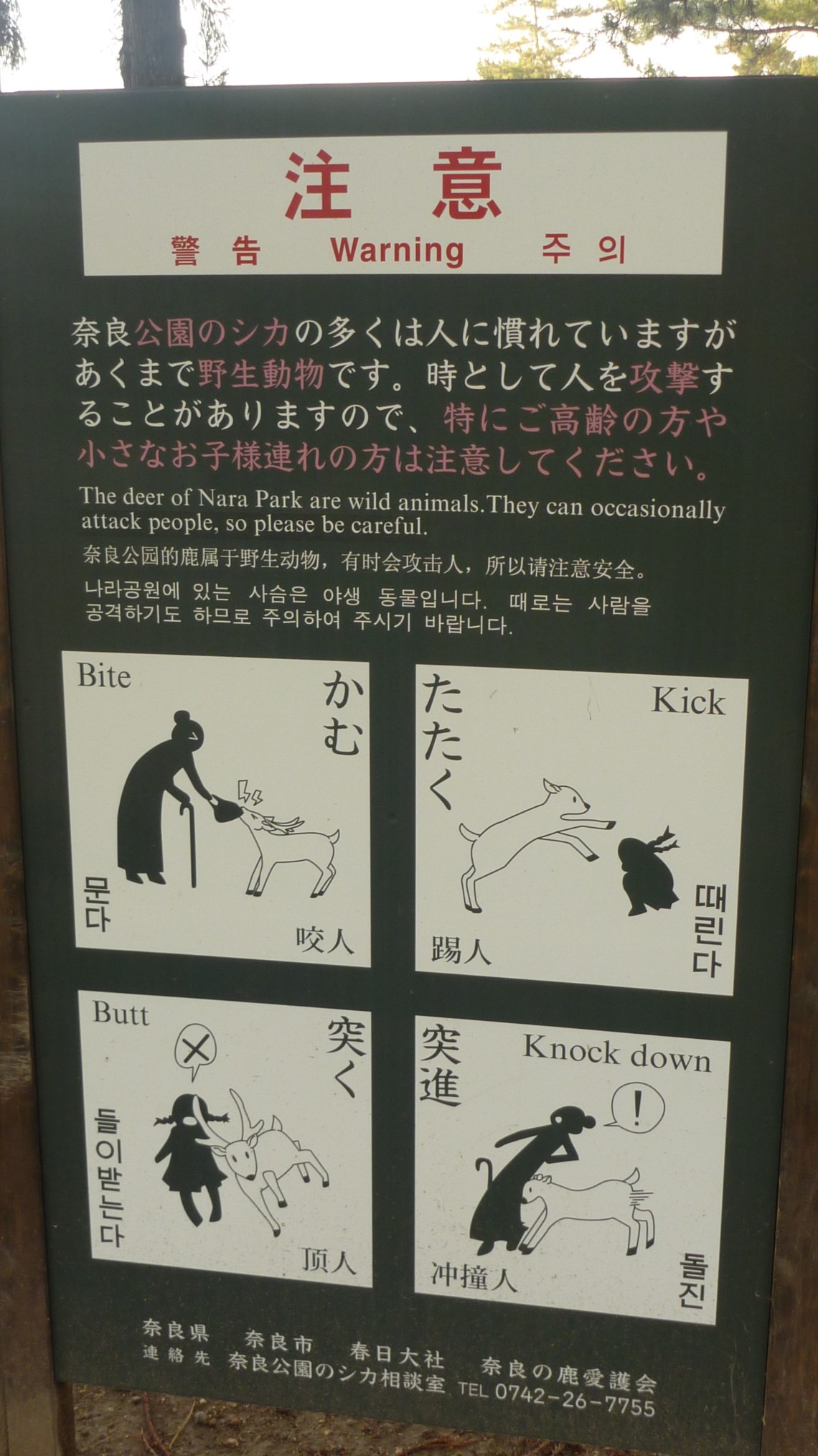
While the deer in Nara Park appear tame because they are used to coexisting in this city with humans, please bear in mind that they are still wild animals. They can still bite you, kick you, headbutt you or knock you down. If they are harrassing you for food, I’d try taking a few slow steps backwards, showing them your empty palms- they normally get the hint after that. Be mindful of your pockets and handbags, too, because there are no boundaries with wild deer.
In Japanese mythology, the deer are actually deities- messengers of the gods, so make sure you treat these sacred animals with respect. Or they could smite you. Probably. Most deer antlers have either been removed or shed naturally, however there are still a few bucks around with impressive antlers, especially in the hills near Nigatsudo. You might want to keep a safe distance from them, especially when the fawns are around.
Funny story… the deer in Nara actually bow to you. Very Japanese. One day, I was in the back field of Nara Park near a family of deer, taking lots of photos because the babies were just adorable. A male approached me, and bowed. I was thinking ‘nice to meet you, too’. Then, with his head down, he charged at me and headbutted me square in the stomach. Knocked the wind out of me. I retreated, and thanked my lucky stars he didn’t have antlers. #gaijinfail


Thanks for sharing. I will definitely revisit Nara in the future! For the deers especially and wonderful nature.
LikeLike